


Bereavement and grief
Grief
Bereavement is something which happens to almost everyone at some point in their lives. The death of someone close to you, whether it was expected or sudden, can be an extremely difficult time, and you will experience many different emotions. Going through this process of emotions and experiences is known as grief. There is a range of support locally and nationally to help.
Everyone experiences grief in different ways and there is no right or wrong way to cope with it. Your emotions after losing someone will depend on many things, including your relationship to them, how you felt about them, and the circumstances of their death, as well as your own personal experiences. Although everyone is different, there are feelings of grief which almost everyone goes through.
Physical effects of grief
Like other forms of stress and trauma, bereavement can weaken your immune system, making you more susceptible to illness. Stress and anxiety can produce physical symptoms. You might experience:
- exhaustion
- loss of appetite or comfort eating
- feeling sick or an upset stomach
- panic attacks
- aches and pains, such as chest pain and headaches
- disturbed sleep or nightmares
- restlessness or hyperactivity.
It is important to eat well, get plenty of rest and express your emotions in whatever way feels right for you. Talk to your family and friends and ask for help if you need it.
Read more on bereavement from Mind.
Cruse Bereavement Care easy read Effects of grief.
Depression
Sometimes the grieving process is especially difficult. Some people find it impossible to acknowledge the bereavement at all, which can mean that their feelings aren’t worked through properly. This may also happen if you don’t have time to grieve properly, perhaps because of work pressures or if you are looking after your family.
This can lead to bouts of depression, loss of appetite and even suicidal feelings. You are more likely to have a difficult grieving process if:
- you are on your own and have no support from your community, family, or friends
- you have unresolved issues with the person who died
- the death was caused by a particularly difficult event, such as a national disaster or an unsolved murder
- the person goes missing or it isn’t clear exactly what happened
- you are unable to attend the funeral or there isn’t one
Depression can be a normal response and can lessen as time goes by. If it doesn’t, you could be clinically depressed. This can be treated, for example with medication, and you should speak to your GP as soon as possible.
Feeling hopeless or suicidal please contact the Samaritans or The Silver Line
Stages of Grief
You may have heard about stages of grief before, as a 5 or 7 stage theory. There are no set stages or an order that everyone goes through, but it can help to know what the stages are and that changes in emotions and mood are perfectly normal.
- shock and disbelief
- denial
- guilt
- anger and bargaining
- depression, loneliness and reflection
- reconstruction (or ‘working through’)
- acceptance
The grieving process can take some time. How long it takes depends on you and your personal situation.
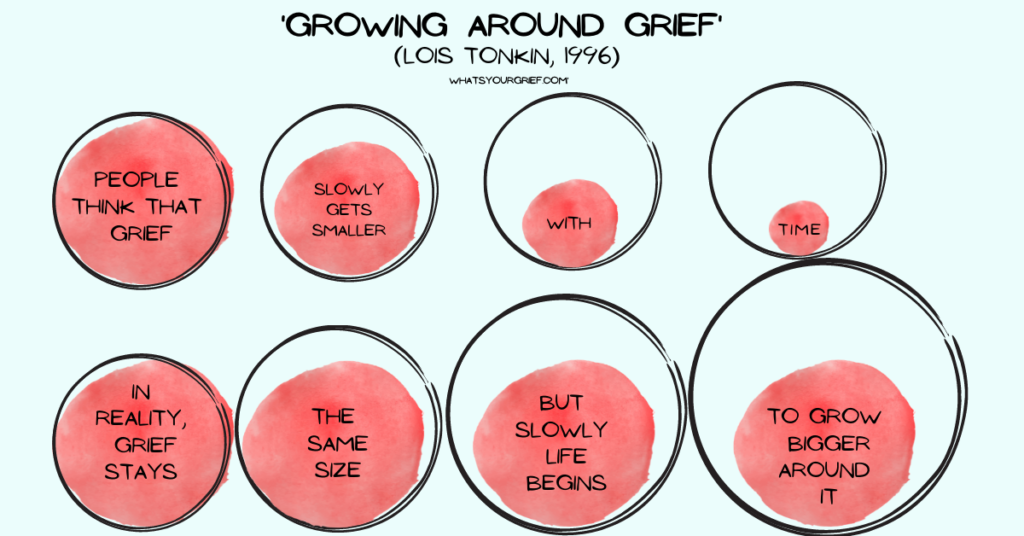
Growing around grief
You may also have heard grief described as being like a circle that represents your life, when you are recently bereaved the different feelings of grief can take up most of this circle, over time your grief doesn’t go away but the circle grows around your grief. There will be some days where you feel grief as strongly as you did when the person first died. But there will also be days when you are able to move on with other parts of your life.
Practical issues
When someone dies you not only have to cope with your loss and the emotions that this brings, but there may also be practical issues that you need to deal with. This can include:
- registering the death
- arranging the funeral
- contacting friends and relatives
- dealing with the will
- sorting out benefits
You may find it difficult or distressing to deal with these practicalities and you shouldn’t try to cope alone. If you can, ask family or friends to help you.
Read more on what to do when someone dies and planning a funeral on InformationNOW
Funeral Services Guide takes you through the process of planning a funeral and dealing with final affairs and coping with grief.
If you have lost a partner or family member and they did certain jobs or responsibilities, you may find you need to ask for more help from others or have to learn new skills. Common things people may need support with after losing someone are
- Cooking classes or sessions on healthy eating and drinking
- gardening
- managing bills, payments and money
- parenting or caring
Read more about Learning throughout adult life
Spirituality and faith
Some people find their spirituality or faith can help process and make meaning of their grief. Every religion has traditions or rituals around bereavement and grief, that support you, friends and family to share experiences of loss.
- periods of mourning such as Jewish ritual of sitting shiva, 13 days of mourning for Hindu’s
- having prayer or meditation time
- reading scripture or spiritual quotes about grief
- remembrance rituals such as Hindu Śrāddha, memorial candles in Christianity, ancestor worship altars in many faiths
Read more about local places of faith on InformationNOW
Ways of coping
There are many different ways to cope with a bereavement and everyone will find different methods helpful. Whatever ways you choose its important you look after yourself, physically and mentally. Grief can be exhausting and stressful.
Counselling and therapy
Counselling involves talking to someone who is trained in the art of listening, so that you can express how you feel and begin to find your own solutions to your problems. Talking and being heard by someone who shows empathy and acceptance can help you to explore the issues that are troubling you. The counsellor may be able to help you to develop a greater understanding of your feelings, thoughts and behaviour.
Your GP practice may have a counselling service attached to it, or your GP may refer you to another NHS counselling service.
NHS Newcastle Talking Therapies is a free short term talking therapy service for people over the age of 16, living in Newcastle. If you are feeling low, worried, or overwhelmed by the pressures of everyday life. Talking therapy can help you to improve your mental wellbeing. If you’re facing depression, anxiety, excessive worry or low mood, you can get help quickly. You can request a referral from your doctor or contact them directly to make an appointment.
Find local Mental Health Support on InformationNOW. Bereavement counselling is available from local charities.
Independent Age has more information about bereavement support
Medication
Your GP may be able to offer you tranquillisers, sleeping pills or antidepressants. They can be helpful for a short period of time, but they can also have side effects which you should discuss with your GP before taking them. Some medication can also cause withdrawal symptoms when you stop taking them and so you need advice to stop taking them safely.
Hobbies and socialising
For some people, continuing a hobby, taking up a new interest, or socialising with others helps to process their grief or distract from it. For others they may not feel ready to do this for some time, but find hobbies and social groups helpful to move forward in a new life after a loss, such as:
- creating new friendships
- volunteering your time to help others or an organisation that supported your loved one
- taking part in creative activities such as music , arts and crafts,
- mindfulness and meditation
You can find local events, activities and community groups on InformationNOW.
Support groups
Support groups offer an opportunity to meet up with other people who are in a similar situation. They can help to deal with feelings of isolation and, at the same time, show you how other people have coped. Finding that you can support others may help you too. People who have experienced bereavement often lead these groups.
Local and telephone support available
Cruse Bereavement Care provides counselling and support, information, advice, education and training services.
Marie Curie Hospice has a service to support people experiencing loss and grief. They also have a specialist terminal illness service.
NHS Newcastle Talking Therapies is a free short term talking therapy service for people over the age of 16, living in Newcastle. If you are feeling low, worried, or overwhelmed by the pressures of everyday life. Talking therapy can help you to improve your mental wellbeing. If you’re facing depression, anxiety, excessive worry or low mood, you can get help quickly. You can request a referral from your doctor or contact them directly to make an appointment.
Age UK England has a helpful video which explains more about Talking Therapies and how they can help you
St Oswald’s Hospice provides bereavement support to children and adults. Helping you to come to terms with your grief and loss.
Independent Age run the Grief Chat service. This is online emotional support for bereaved people, access to trained bereavement counsellors and referral into other specialist bereavement services
The Muslim Initiative is a community association based in Newcastle upon Tyne who offer bereavement and burial advice.
Tyneside and Northumberland Mind has a telephone support line which offers listening, practical and emotional support to anyone over 16. It’s open 7 days a week 8am to 10pm.
Mental health listening services, counselling and support groups are available to support people in Newcastle. Read more on InformationNOW about telephone helplines and online resources
Bereavement Advice Centre is a free helpline and web-based information service. They give practical information and advice and signposting on the many issues and procedures that face us after the death of someone close
At a Loss is a hub of information and support for bereaved people.
The Silver Line is a free, confidential, free helpline providing friendship for older people in the UK. Open 24 hours a day, every day of the year.
Financial support
Bereavement benefits DWP has a one stop service to help you with financial support available.
Bereavement – Support after a death Age UK’s information guide
Support for parents and siblings
The Compassionate Friends support bereaved parents and siblings with information and peer to peer companion groups after their child dies.
Support for people with learning disabilities or autism
It can be a particularly difficult time for people who find it difficult to describe or talk about their feelings of grief if they have a learning disability or autism. Contact Skills for People or Mencap grief helpline
Macmillan easy read bereavement booklet
Feeling down booklet by the Scottish commission for learning disability
Support for carers
Newcastle Carers support carers when the person they care for dies. They can support you to adjust to your new way of life as you move away from your caring role
Carers Direct information on Bereavement support
Suicide, sudden or unexpected deaths
Survivors of bereavement by suicide offer information and support for adults over 18 including:
- support groups
- resources and booklets
- poetry and prose
- Helpline
Read more about suicide on InformationNOW
Help is at Hand: A resource for people bereaved by suicide and other sudden, traumatic death Department of Health’s guide
Widowed people
WAY Widowed and Young is a UK charity that offers a peer-to-peer support network for anyone who’s lost a partner or spouse before their 51st. They have a members only confidential telephone helpline and social events.
Grieving for a pet
Grieving for the loss of a loved pet can be similar to the loss of a friend or family member. Some people can feel ashamed or unable to share their emotions and feelings as they arent grieving for human. However it is common for people to feel the same.
Blue Cross have a pet loss support team you can call, email or live chat with and a facebook support group.
Useful resources
Newcastle Libraries have books that can help you to understand your grief. The have a Death Positive library with books that can help you to explore the topic.
Beyond Words is a charity that provides books and training to support people who find pictures easier to understand than words.
Patient Information Centre has a range of easy to read self help guides for bereavement, depression and sleep .
Bereavement Services at Newcastle City Council can provide you with help and advice about arranging a funeral and choosing a memorial. They can provide information about cemeteries, graves, crematoria and the associated costs.
Last updated: December 9, 2025
 Share on Twitter